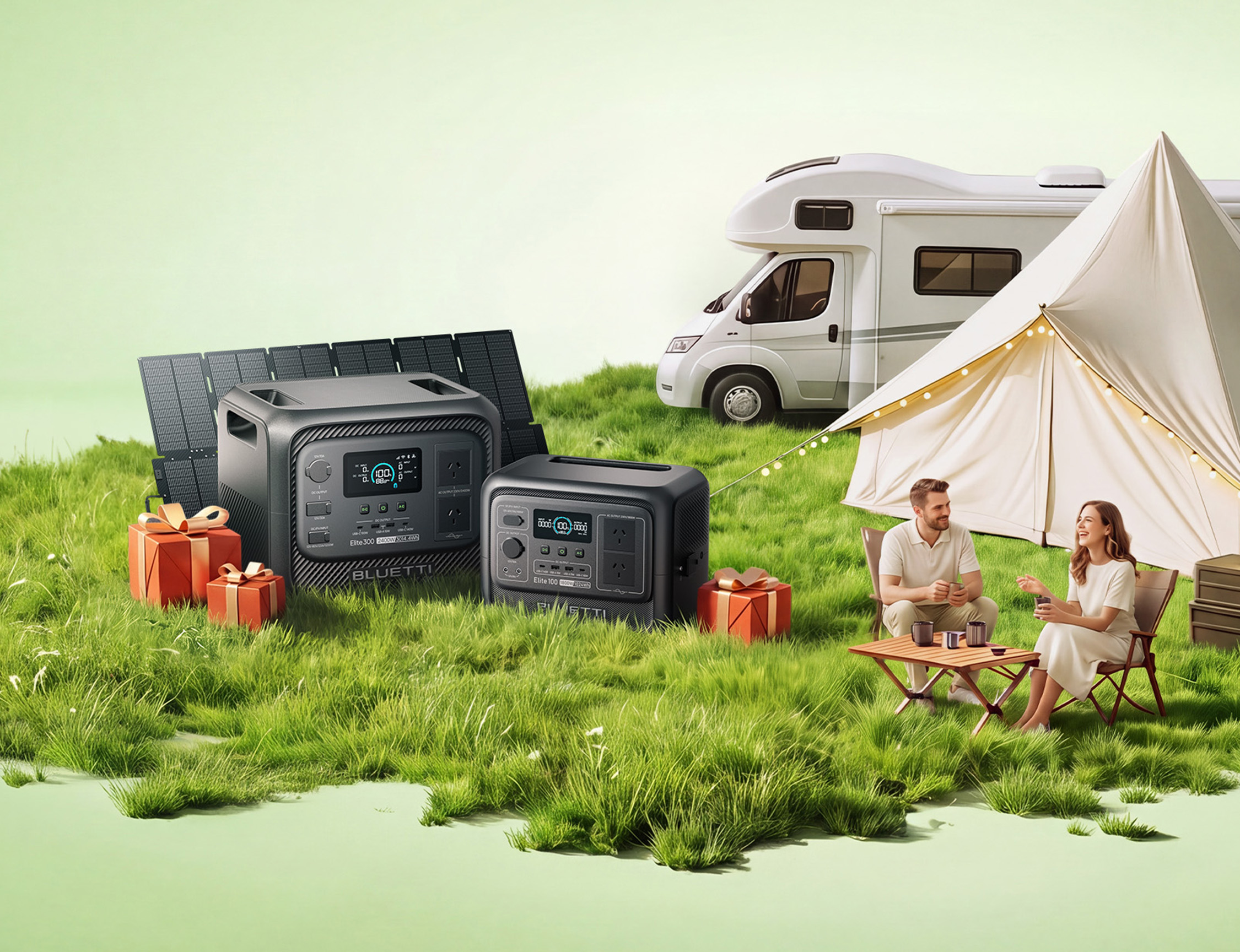

Off-Grid Solar Battery System for Caravans: Battery, Solar and Inverter Setup

A caravan off-grid system is not just a smaller version of a house system. It has its own constraints: 12V loads, inverter surges, limited roof area, payload limits and the ability to recharge while towing. That is why the right off-grid solar battery system for a caravan has to be sized as a mobile electrical architecture, not just as a battery-plus-panel bundle.
The direct answer is that caravan sizing should begin with four questions: what your 12V and 240V loads really consume, how much solar roof space you actually have, how much charging support you can get while driving and how much payload you can afford to dedicate to the energy system. Those factors can change the correct setup even when two caravans appear similar on paper.
If you are planning a remote-house system instead, the companion page on off-grid solar battery system in Australia is the better fit. If your use case is more mixed van living, the existing portable power for van life page is also relevant. This page stays tightly focused on caravan electrical setup.

Map the Caravan's 12V and 240V Loads
Start by separating loads into three groups:
- always-on 12V loads such as fridge electronics, lighting, fans, pumps and charging
- intermittent 240V loads such as coffee machines, induction appliances or small microwaves
- must-run vs nice-to-have loads
This separation matters because caravan systems often fail from poor overlap planning, not from a lack of total battery capacity. A fridge may run all day with modest average energy use, while a coffee machine or induction plate can demand a much larger inverter for a short period.
A useful first worksheet looks like this:
Caravan load map
|
Load type |
Typical question |
Why it matters |
|
Base 12V loads |
What runs every day even when you are careful? |
Sets the non-negotiable battery draw |
|
Comfort 12V loads |
What do you use more in hot or cold weather? |
Changes seasonal energy use |
|
Short 240V loads |
What starts with high wattage? |
Determines inverter size more than battery size |
|
Critical travel-day loads |
What must stay live while towing? |
Affects charging strategy and system wiring |
For portable-system readers, BLUETTI's AU range shows how power class changes quickly. The Elite 300 offers 3,014.4Wh, 2,400W output and an RV-friendly 12V/30A DC port, while the Elite 400 moves to 3,840Wh and 2,600W with wheels and handles for heavier yet still movable use.


BLUETTI Elite 300 Portable Power Station 3,014Wh, 2,400W
1,200W Max Solar Input
≤10ms UPS Response Time
6,000+ Life Cycles to 80% Capacity
3kWh Power at 2kWh Portability (Just 26.3kg)
8 Versatile Ports for Plug-and-Play Convenience
XT90 12V/30 A RV Port — Ideal for Van Life & DIY Setups


BLUETTI Elite 400 Portable Power Station | 3,840Wh 2,600W
- 3,840 Wh capacity
- Up to 1.3× longer runtime
- 2,600 W rated / 3,900 W Lifting Power
- 0-80% in 70 Min (2,800W)
- Lightest 3.8kWh Power Station(39 kg)
Those specs do not choose the system for you, but they show why caravan buyers must check both runtime and power-delivery class.
Battery and Inverter Sizing for Appliances
Battery sizing in a caravan starts with daily energy use, but inverter sizing starts with overlap and surge. That is why a caravan can need a relatively large inverter even if the average daily energy number seems moderate.
Use this simple process:
- total the daily watt-hours of your 12V and 240V loads
- identify which 240V appliances can overlap
- find the highest simultaneous running watts
- add margin for startup or heating loads
- decide how many days or half-days you want before needing a strong recharge
The same solar-generator-kit sizing logic applies here: list appliances, account for starting watts, then match storage and output power separately. It also highlights LiFePO₄ battery longevity and notes that many modern systems use MPPT charging to improve solar harvest.
For caravan buyers, that means the "right size" often comes down to use profile:
- light touring with compressor fridge, lights and device charging may fit a mid-size system
- longer stays with coffee machines, higher inverter loads and cloudy weather margin push the system upward
- full-time or shoulder-season touring usually requires stronger recharge planning, not just more battery
Appliance-threshold table
|
Use case |
Battery emphasis |
Inverter emphasis |
|
Fridge, lights, phones, laptops |
Daily Wh and overnight reserve |
Usually modest |
|
Fridge plus coffee machine or microwave |
Both matter |
High short-duration power becomes critical |
|
Longer off-grid stays |
Recharge efficiency matters |
Depends on cooking and climate loads |
|
Hybrid comfort + work setup |
Larger storage and more outlets |
Higher overlap planning |
Roof Solar, Portable Solar and Tow-Vehicle Charging

Caravan solar design is limited by roof area, shading and orientation. A caravan parked under trees or rotated away from ideal sun can underperform badly even if the nominal panel wattage looks generous.
That is why many touring setups combine three charging paths:
- fixed roof solar for convenience
- portable solar for campsite flexibility
- vehicle charging while towing
BLUETTI's Charger 1 provides up to 560W alternator charging and is six times faster than standard cigarette-lighter charging, while Charger 2 adds simultaneous alternator plus solar charging up to 1,200W and support for 12V/24V device output via the wider ecosystem. Those distinctions matter for caravans because towing days can become recovery days for the battery rather than dead time between campsites.

BLUETTI Charger 1 | 560W Alternator Charger
95% Portable Power Stations Compatibility
Simple DIY Installation
Fast On-the-Road Charging
Smart Battery Protection Features
Enhanced Heat Dissipation
Ideal for Vehicle Charging on the Go


BLUETTI Charger 2 | 1200W Alternator & Solar Dual DC Charger
Dual Alternator + Solar Input
95% Portable Power Stations Compatibility
Ultra-Fast 1,200W On-the-Road Charging
800W Emergency Jumpstart (BLUETTI models)
Pulse Maintenance for Battery Longevity
Real-Time App Monitoring (Bluetooth/Wi-Fi)
The solar generator collection also frames panel pairing around power needs, surge allowance and solar input limits. For example, a 1,500Wh to 2,000Wh class unit may run a small or medium fridge for one to two days depending on conditions, and recharge speed still depends heavily on panel input and sunlight.
This is the core caravan lesson: do not size storage without sizing refill. A bigger battery that cannot recover from a few cloudy days may still feel undersized in real touring.
Charging-path comparison
|
Charging method |
Strength |
Limitation |
|
Roof solar |
Passive daily harvest |
Roof area and shading limit output |
|
Portable solar |
Can chase the sun at camp |
Extra setup and storage burden |
|
Alternator charging |
Useful on travel days |
Depends on driving pattern and hardware |
|
AC mains top-up |
Fast and predictable in parks |
Not available off-grid |
Payload, Ventilation and Electrical Compliance
Caravan energy design is not only about electricity. It is also about weight, balance, heat, cable routing and safe operation in a mobile environment. A battery system that looks excellent on paper may be a poor caravan fit if it adds too much mass, occupies awkward storage space or forces unsafe ventilation and cable compromises.
This is why mobile users should think in "system burden", not just battery size. The Elite 300 weighs 26.3kg in the compact 3kWh class, while the Elite 400 adds wheels and pull-handle mobility to offset its larger capacity class.
Portable expansion choices also affect mass planning. The BLUETTI comparison guide between B500K and B300K shows a meaningful difference between 5,120Wh at 45kg and 2,764.8Wh at 29.5kg, which is exactly the sort of trade-off caravan owners must judge against tow limits, ball weight and storage practicality.
If your use case is less caravan-specific and more campsite oriented, the separate off-grid camping power setup page may be a better next read because it has fewer payload and integration constraints.
Caravan planning checklist
|
Question |
Why it matters |
|
Can the battery weight be carried safely? |
Payload is a hard limit, not a preference |
|
Will the chosen storage position stay cool and secure? |
Vibration and heat affect usability and safety |
|
Do I have enough charging diversity? |
Roof solar alone may not recover the system |
|
Are my must-run 12V loads protected first? |
Critical loads should not be crowded out by comfort loads |
Conclusion
A caravan off-grid system works best when battery size, inverter size and charging strategy are designed together. The right setup is not the one with the biggest advertised capacity. It is the one that can support your real 12V base load, handle short 240V peaks, recover reliably from roof solar or towing input and still respect the physical limits of the van carrying it.
Frequently Asked Questions
Start with the real daily load list, split between 12V and 240V appliances, and separate must-run loads from convenience loads.

Shop Products for This Article


You May Also Like