
Portable Power Station for a Fridge: Sizing and Runtime Guide

A portable power station can run most household and bar fridges when its inverter can handle compressor startup and its battery has enough usable energy for the required runtime. The most accurate sizing method uses measured daily kWh rather than nameplate watts, then adds a margin for inverter losses, hot weather, door openings, and ageing.
Keeping food cold is one of the first priorities during a blackout or off-grid trip. Fridges are relatively modest loads while the compressor is running, but they cycle on and off and can draw a higher current for a moment at startup. That means both inverter power and battery capacity matter. A good plan starts with the appliance's real energy use and the conditions in which it will operate.

Can a Portable Power Station Run a Fridge?
Yes. Most modern fridges can run from a portable power station with a pure-sine-wave inverter, provided the station's continuous and surge capability suits the compressor. A fridge labelled 150W does not necessarily consume 150W continuously; the compressor may run for part of each hour and stop when the cabinet reaches temperature.
The best way to understand the load is to use a plug-in energy meter over a representative 24-hour period. If backup matters in hot weather, repeat the measurement under warmer conditions. A meter may show, for example, that a refrigerator uses 1.0kWh per day even though its compressor runs only part of the time. That daily energy figure is more useful for runtime planning than multiplying the running wattage by 24 hours.
What Size Power Station Do You Need for a Fridge?
When choosing a power station for a fridge in Australia, check three numbers: compressor running watts, startup surge, and daily energy. The inverter's continuous rating must exceed running demand, and its short-term surge capability must tolerate compressor startup. Battery capacity then determines how long the fridge can operate.
Start with the energy target: measured daily consumption multiplied by the required number of days. Then choose a battery whose usable AC energy exceeds that target.
Required nominal battery capacity (Wh) ≈ daily fridge energy (Wh) × required days ÷ usable AC fraction
For example, if a fridge uses 800Wh per day and you want one full day of backup, assuming about 85% of nominal battery capacity reaches the AC load: 800 ÷ 0.85 ≈ 941Wh. A nominal 1,000Wh-class battery would therefore be close to the minimum before adding extra reserve for hot weather, ageing or unusually frequent door openings.
If a fridge uses 1.0kWh per day, 24 hours requires about 1,000Wh at the appliance before conversion losses and reserve, so a nominal 1,024Wh unit is a marginal one-day choice. A 2kWh-class station provides more buffer. If the measured load is only 0.5kWh per day, the same battery budget can support a much longer period.
What Affects Fridge Runtime?
A fridge's energy use can change significantly without any change to its rated wattage. Temperature, airflow, and user behaviour all affect how often the compressor has to run.
Fridge Size and Efficiency
A large side-by-side refrigerator generally uses more energy than a compact unit, but age and efficiency matter as much as volume. Damaged door seals, heavy frost, dirty condenser coils and poor insulation increase compressor run time. An energy label or measured daily consumption provides a better planning figure than cabinet size alone.
Ambient Temperature and Ventilation
A refrigerator in a hot garage, caravan or sun-exposed area must reject heat into warmer air, so the compressor runs longer. Leave the ventilation clearances specified by the manufacturer and keep the appliance away from direct afternoon sun where possible. A fridge that uses 0.8kWh on a mild day may use more during a heatwave.
Door Openings and Temperature Settings
Every door opening lets cold air escape and introduces warm, humid air. During an outage, group items before opening the fridge and close the door promptly. Setting the cabinet colder than necessary also increases energy use. Keep food at safe temperatures, but avoid unnecessary overcooling when battery energy is limited.
How to Keep a Fridge Running Longer
Runtime improvements are often easier and cheaper than buying a much larger battery. Reduce the fridge's heat load, avoid unnecessary openings, and use recharge opportunities efficiently.
Cool the Fridge Before the Outage or Trip
If an outage is forecast or you are leaving for a trip, bring the fridge and its contents to normal operating temperature while mains power is available. A warm fridge filled immediately before switching to battery power may run continuously for a long period. Pre-chilled food and drinks reduce the initial energy demand.
Keep the Door Closed
During a blackout, decide what you need before opening the door. Keep frequently used drinks in a separate cooler if that prevents repeated fridge openings. Full shelves can help retain cold mass, but do not block internal air circulation. Food safety should remain the priority. For a simple household blackout rule, NSW Health advises that food in a closed refrigerator will generally remain cold for about four hours after power is lost. Keep the door closed as much as possible. If potentially hazardous food has been between 5°C and 60°C, apply the cumulative FSANZ 2-hour/4-hour rule: food held in that range for more than four hours should be discarded.
Check Whether Eco Mode Interrupts the Fridge
Some power stations use an energy-saving mode that turns AC output off when the load remains below a threshold. Because a fridge compressor cycles off, the power station may incorrectly interpret the low standby load as inactivity. Check the power station manual and disable or adjust eco mode if necessary so the fridge can restart when the thermostat calls for cooling.
Recharge From Solar, a Vehicle, or Mains Power
Recharging can turn a fixed battery into a longer-duration system. Solar input is useful in daylight, while vehicle or mains charging can help when available. Do not assume solar will replace a full day's fridge consumption every day: cloud, shading, and panel orientation can reduce harvest. Compare expected input watt-hours with the fridge's measured daily kWh.
Keep the Fridge Ventilated and Out of Direct Heat
Do not push a fridge tightly against a wall or cover its ventilation openings. The condenser needs airflow to remove heat. In a garage, patio, or other hot location, keep the fridge away from direct sun while maintaining the ventilation clearances specified by the manufacturer. Before using a bar fridge outdoors, confirm that the manufacturer permits outdoor operation. A standard indoor fridge may not be designed for rain, condensation, direct sunlight, or outdoor temperature extremes, so shading alone does not make it suitable for outdoor use. Better ventilation can reduce compressor run time and also help protect the appliance from overheating.
A portable power station is a temporary plug-in power source. It does not make an indoor-rated refrigerator suitable for permanent outdoor installation and does not replace properly installed weatherproof outdoor electrical infrastructure where a permanent setup is required.

Keep Your Fridge Running With BLUETTI Backup Power
For dedicated refrigerator backup, the BLUETTI FridgePower is a more purpose-built option. It provides 2,016Wh of capacity, 1,800W continuous output, and up to 3,600W surge power, giving it enough headroom for the startup demand of many household and bar fridges. Its <10ms UPS switching also allows it to take over automatically when mains power fails, which is useful when the fridge needs to stay running without manual intervention. Actual runtime still depends on the fridge’s measured daily energy use, ambient temperature, and door openings.


FridgePower
- 75mm Ultra-Slim Design
- 2,016Wh Capacity
- 1,800W Rated / 3,600W Peak Power
- <10ms Automatic UPS Switching
- As Low as 4W Standby Power
- Quiet, Fume-Free Indoor Backup
If you want a more versatile portable power station for a bar fridge and other essential loads, the BLUETTI Elite 200 V2 has 2,073.6Wh capacity and 2,600W AC output. It can support the fridge while also leaving room for lights, laptops, communications equipment, or other household essentials, provided the combined running and startup demand stays within the inverter limits.


BLUETTI Elite 200 V2 Portable Power Station | 2,600W, 2,073.6Wh
1,000W Max Solar Input
15ms UPS Response Time
6,000+ Life Cycles to 80% Capacity
MPPT Controller, BMS, and More
Ideal for Home Backup and Outdoor Adventures

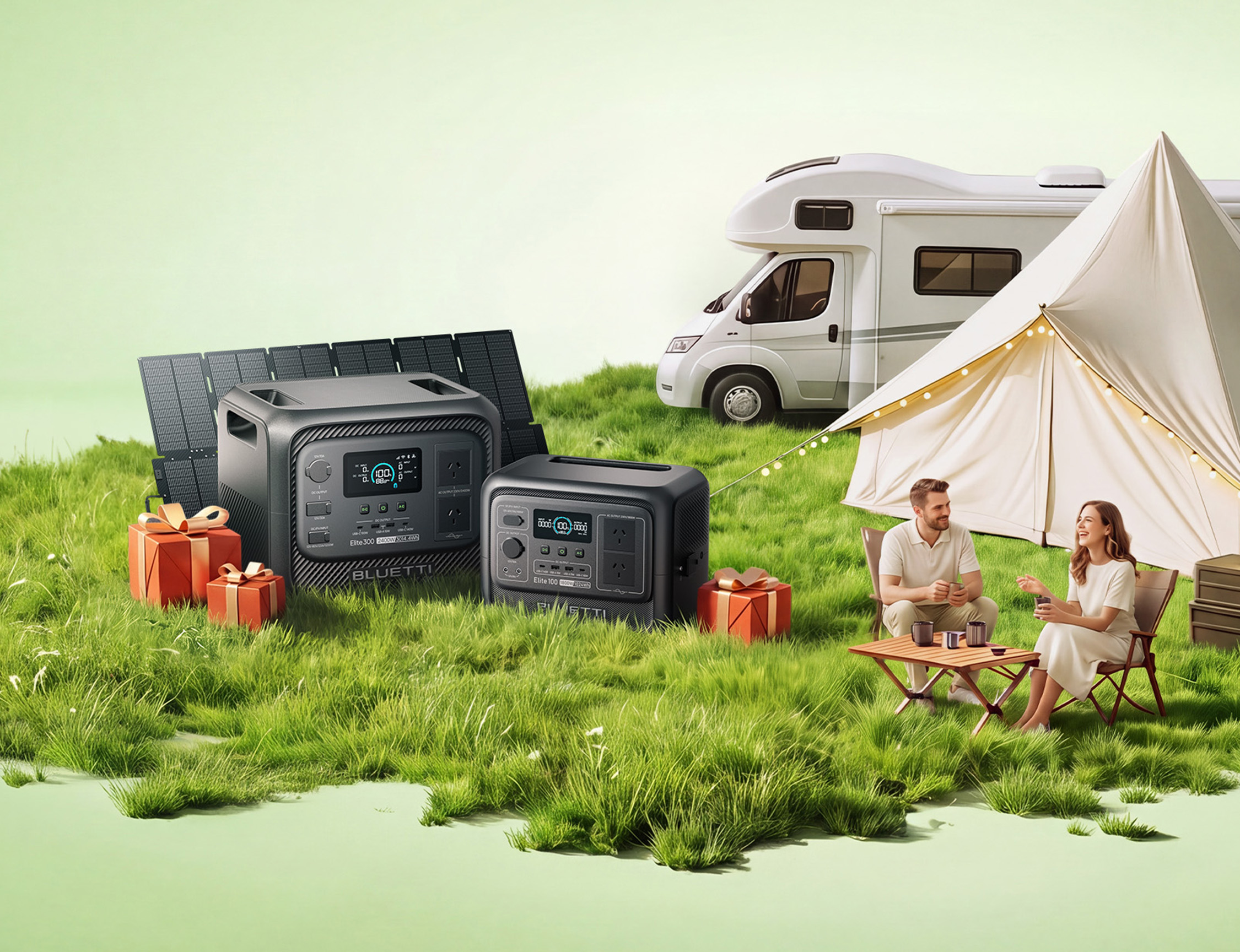
Where several days of refrigeration or additional household loads are part of the plan, the BLUETTI Elite 300 provides 3,014.4Wh capacity and 2,400W AC output. Its larger energy reserve can support longer fridge runtime or shared backup for lighting and communications, but the same principle applies: size from measured watt-hours and leave a reserve rather than assuming the full nameplate capacity reaches the appliance.


BLUETTI Elite 300 Portable Power Station 3,014Wh, 2,400W
1,200W Max Solar Input
≤10ms UPS Response Time
6,000+ Life Cycles to 80% Capacity
3kWh Power at 2kWh Portability (Just 26.3kg)
8 Versatile Ports for Plug-and-Play Convenience
XT90 12V/30 A RV Port — Ideal for Van Life & DIY Setups
Conclusion
A fridge is a practical load for a portable power station, but reliable sizing requires more than checking running watts. Confirm compressor startup, measure daily energy use, account for inverter losses, and consider hotter-than-normal conditions. A larger battery extends runtime, while careful door use, ventilation, and timely recharging can make the same battery last much longer. Test the fridge and power station together before relying on the setup during a blackout or trip.
Frequently Asked Questions
There is no universal inverter size for a refrigerator. The station’s continuous output must exceed the running load, and its permitted short-term surge must cover compressor startup. For runtime, compare usable battery watt-hours with measured daily kWh and leave a reserve for conversion losses and warmer conditions.

Shop Products for This Article


You May Also Like