
How Long Can You Stay in a Caravan Park in Victoria? Stay Limits and Residency Rules

Victoria has no single maximum stay for all caravan parks. Holiday stays depend on the park's booking rules and land-use conditions. If the park is your main home, residential rights may arise after 60 consecutive days or earlier with written permission. Different agreements apply to longer-term residential stays.
How long can you stay in a caravan park in Victoria if you find a spot you love and want to settle in for the next few months? Whether you are travelling around the state or looking for a place to live, the answer depends on more than the number of nights you book.
A holiday site and a residential site can look identical, yet offer very different rights. Understanding which arrangement you are entering makes it easier to plan your dates, budget for the stay, and avoid an unexpected move.

How Long Can You Stay in a Caravan Park in Victoria?
There is no statewide maximum that applies to every caravan park in Victoria. On a holiday, you can stay for as long as your confirmed booking and the park's permitted use allow. A private park may offer a few weeks or several months, while public-land parks often have stricter limits.
If you want to live in a caravan park as your main home, look for a park offering residential accommodation. A residential agreement may be for a fixed term or continue without a fixed end date, subject to the relevant tenancy laws. The key distinction is whether you are visiting or living there, rather than simply how many nights you book.
What Does the 60-Day Rule Mean for Caravan Park Residency?
The Consumer Affairs Victoria definition of a park resident identifies two routes to residential status. If the park is your main home, you can qualify through written permission from the owner to live there, or by living there continuously for at least 60 days for residential purposes.
For example, someone who moves into their caravan as their main home with written permission can have residential rights from the start. Someone spending ten weeks on holiday does not gain those rights simply by passing day 60.
Resident status matters because Victoria's Residential Tenancies Act 1997 provides protections concerning rent, repairs, privacy and the ending of a residential arrangement. The 60-day threshold is therefore about legal rights, not a compulsory departure date.
What Agreements Apply to Long-Term Caravan Park Stays?
There are two main residential arrangements. Which one applies depends on whether you rent your accommodation, own a registrable caravan or own a different type of movable dwelling.
Caravan Park Residency Agreements
A caravan park residency agreement under Part 4 of the Act applies to residents renting their accommodation or living in their own registrable caravan on a rented site. It can be verbal or written, and may specify a fixed term or operate periodically. The agreement covers occupancy, rent or hiring charges, services and park rules. Residents can apply to VCAT for a written agreement if needed. The official Caravan park guide explains the documents and rights associated with this arrangement.
Part 4A Site Agreements
If you own a relocatable cabin or manufactured home and rent the land beneath it as your main residence, a Part 4A site agreement generally applies. This category excludes registrable caravans, holiday homes and parks on Crown land.
For eligible Part 4A site tenants, caravan parks registered under Part 14 of the Public Health and Wellbeing Act 2008 on or after 1 September 2011 are subject to a minimum five-year term for site agreements. If a shorter term is specified, the agreement is treated as having a five-year term.
Since 1 July 2026, new Part 4A site agreements must use the prescribed standard form.
What Can Limit Your Stay at a Particular Caravan Park?
Even when an extended stay is legally possible, the individual park may have restrictions on the dates or type of occupation it can offer.
Park Booking Policies and Seasonal Availability
Holiday parks may cap consecutive nights, restrict long bookings during busy periods or close sites for maintenance. Summer holidays and Easter can make it difficult to extend a booking on the same pitch. A park that offers a monthly rate in winter may only have short holiday bookings available over Christmas.
Council Planning and Land-Use Restrictions
Councils regulate caravan park registration and land use. However, Section 518 of the Residential Tenancies Act 1997 prevents planning schemes and permits under the Planning and Environment Act 1987 from imposing a duration limit on caravan park residency where that section applies. Crown land visitor permits are a separate matter: the Victorian Government's Crown land caravan park policy generally caps visitor stays at 59 nights in a row and 180 days per calendar year. Separate arrangements exist for eligible existing residents and temporary itinerant workers. These are not statewide limits for private parks.
Site Type and Residential Use Conditions
Tourist sites are intended for visits; annual holiday sites may allow you to leave a caravan on site while restricting how often you occupy it. Residential sites are intended for people living there as their main home. A 12-month holiday-site agreement, for example, can cover storage and intermittent visits rather than 12 months of continuous occupation.
What Should You Check Before Booking an Extended Stay?
Before paying a deposit, confirm the following details so you know exactly what your extended stay will involve.
Confirm the Accommodation Type
Tell the operator what you will occupy: your own touring caravan, a rented cabin or a dwelling you own. Explain whether this will be a holiday, temporary work accommodation, or your main home. Ask for the corresponding booking terms or proposed residential agreement and, if buying an on-site dwelling, confirm that you can take over or obtain the site agreement before completing the purchase.
Check Stay Limits and Extension Options
Ask for the earliest arrival date, latest departure date, maximum consecutive nights, and any annual occupancy cap. Find out when you must request an extension, whether you can keep the same site and whether the park can confirm the extra weeks in advance. Get the agreed dates and extension conditions in writing before paying.
Review Fees and Agreement Terms
Request a written breakdown of the weekly site or accommodation charge, bond or deposit, metered electricity, additional occupants, pets and any storage fees. Multiply the weekly charge by your planned number of weeks, then add one-off charges and estimated utilities. Check cancellation terms and how rent or fees may increase. Under the new site agreement requirements in force from July 2026, prospective Part 4A tenants must also receive prescribed disclosures, including rent-increase projections for fixed-increase methods.
Check Facilities and Park Rules
Visit the park if possible. Check whether showers, toilets, laundry and waste disposal are open year-round, and whether drinking water is available at your site. Read the rules for visitors, pets, noise and vehicle parking. If you will be there for months, check mobile reception and the travel time to shops, pharmacies and medical services. Ask where to go during a flood or bushfire evacuation.
Confirm Power and Utility Arrangements
Confirm whether your site is powered and how electricity is billed (included, metered or charged separately). Check the socket rating and the lead your caravan requires: Energy Safe Victoria recommends a caravan supply cord rated at 15 amps and in good condition. Ask whether drinking water and wastewater connections are available at the pitch or at communal facilities.
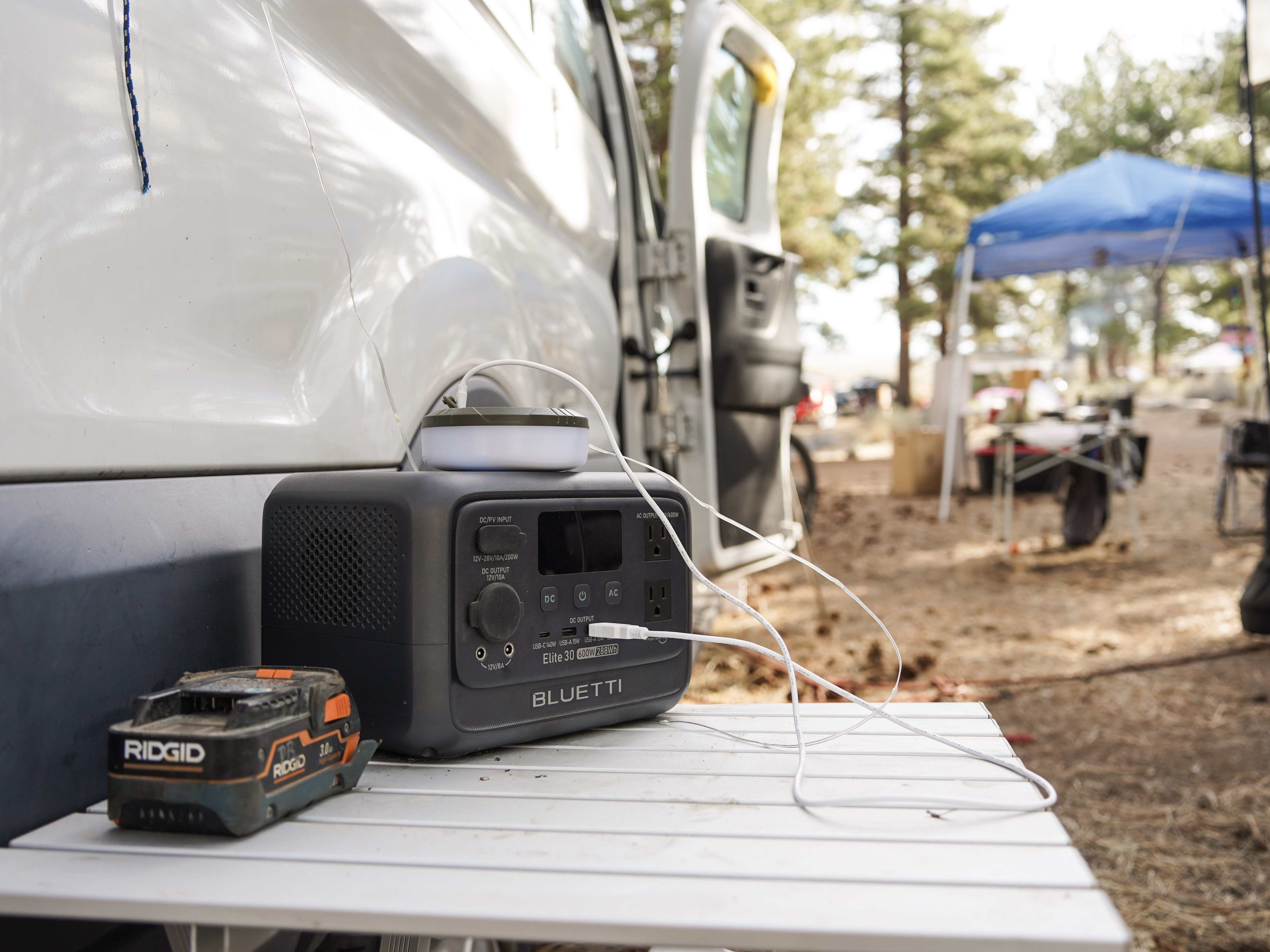
If you need occasional independent power, our portable power stations can help during short interruptions or stays on unpowered sites. The BLUETTI Elite 100 V2 has a 1,024Wh battery and 1,800W rated AC output, making it useful for charging phones and laptops or running compatible lighting. A powered site remains the practical choice if you regularly run energy-intensive appliances such as air conditioning.


BLUETTI Elite 100 V2 Portable Power Station | 1,800W 1,024Wh
1,000W Max Solar Input
10ms UPS Response Time
4,000+ Life Cycles to 80% Capacity
Lightweight and Portable (Only 25 lbs)
Ideal for Camping and Home Backup

For unpowered sites, ask whether folding panels can be placed within your allotted pitch. Our solar generator kits combine compatible solar panels and portable storage, so you can recharge during sunny periods where the park permits panel use.
If you make regular drives between parks, the BLUETTI Charger 2 is another recharging option for compatible vehicles and power stations, with suitable installation. It is most useful on touring days rather than when the caravan stays parked for weeks.


BLUETTI Charger 2 | 1200W Alternator & Solar Dual DC Charger
Dual Alternator + Solar Input
95% Portable Power Stations Compatibility
Ultra-Fast 1,200W On-the-Road Charging
800W Emergency Jumpstart (BLUETTI models)
Pulse Maintenance for Battery Longevity
Real-Time App Monitoring (Bluetooth/Wi-Fi)
Conclusion
You can stay in a Victorian caravan park for weeks, months or longer if the park offers the right arrangement. The 60-day rule concerns residential rights, while actual stay limits depend on the site and its terms. Before committing, confirm your intended use, permitted dates and total cost in writing. If the park will be your main home, make sure the residential agreement suits your plans.
Frequently Asked Questions
No. A holiday booking may be shorter or longer than 60 days depending on the park. The 60-day residency threshold concerns legal status for people living at a park as their main home.

Shop Products for This Article


You May Also Like