
How to Keep Your Internet Running During a Power Outage in Australia

Internet can stay online during a blackout when the equipment in your home has backup power and the external network is operating. Power the NBN connection box, modem and router your setup uses, then choose enough battery capacity for the hours you need. Mobile data offers another connection when fixed broadband is down.
A laptop with plenty of battery is little comfort when the power goes out, and your internet disappears mid-call. The first instinct is often to plug the router into a battery, but the cable behind it may lead to another powered box in a different room. Miss that box, and your laptop can show a Wi-Fi connection with no internet.
To keep internet going during an outage, you need to know where the connection is breaking. That makes the difference between a straightforward backup-power setup and a time to switch to mobile data, especially when you need to get back to work.

Will Your Internet Still Work During a Power Outage?
Yes, if the equipment carrying your connection stays powered both at home and in the network. A router can still broadcast Wi-Fi when its internet connection has stopped, so seeing your network name on a phone does not establish that broadband is working. The outcome also depends on your NBN connection type, which you can find in your provider’s account or installation paperwork.
On Fibre to the Premises (FTTP), backing up the connection box and router can keep the service online during a home power outage. Fibre to the Node (FTTN), Building (FTTB), Curb (FTTC) and Hybrid Fibre Coaxial (HFC) also rely on powered equipment beyond your home; a power loss there interrupts the service even when your own devices are running.
Fixed Wireless needs its tower and fibre network to remain powered. With Sky Muster satellite, restoring power to your home equipment will usually reconnect the service, although a ground-station power outage can delay it.
Which Equipment Needs Backup Power?
Follow the connection from the wall to your router, then out to the room where you need internet. Every powered device along that path belongs in the backup plan.
NBN Connection Box
If you have FTTP, FTTC or HFC, include the indoor NBN connection box and its power supply. It may be mounted in a cupboard or utility area away from the router. Keeping the router on while this box is off leaves you with a Wi-Fi signal but no fixed internet connection.
By contrast, FTTN and FTTB do not use a separate nbn connection box: the modem connects to the telephone wall socket. Fixed Wireless and Sky Muster have indoor NBN equipment to include as well. Identify the power plug for each required box so it is ready to move onto backup power.
Modem and Wi-Fi Router
Back up the Wi-Fi router that creates your home network. If a separate modem sits between it and the wall connection, include that device too; with a combined modem-router, one power supply covers both jobs. Follow the router’s WAN or Internet cable to identify a separate modem or connection box rather than counting every box in the cupboard as a modem.
Mesh Wi-Fi Nodes and Other Network Equipment
Keep the primary mesh unit powered, then add only the satellite nodes needed to reach your workspace. If the laptop connects through an Ethernet switch, that switch needs backup too. A Wi-Fi access point powered over Ethernet depends on its PoE switch or injector, so back up the device supplying that power. A cordless phone base is another load if you want home phone calls as part of the setup.
How to Keep Wi-Fi Running During a Power Outage
Once you know which plugs must stay powered, choose how the equipment will transfer onto battery. Set it up before an outage to avoid reconnecting everything in the dark.
A UPS for Brief Interruptions
Plug an AC UPS into the wall, then connect the network equipment’s original power adaptors to its battery-backed sockets. Some UPS units also have surge-only sockets, which do not supply battery power. Leave the UPS switched on and charged so it can take over when mains power drops. For sizing, use the manufacturer’s runtime chart at your network’s combined wattage; the VA rating alone does not tell you how many minutes you will get.
A Portable Power Station for Longer Outages
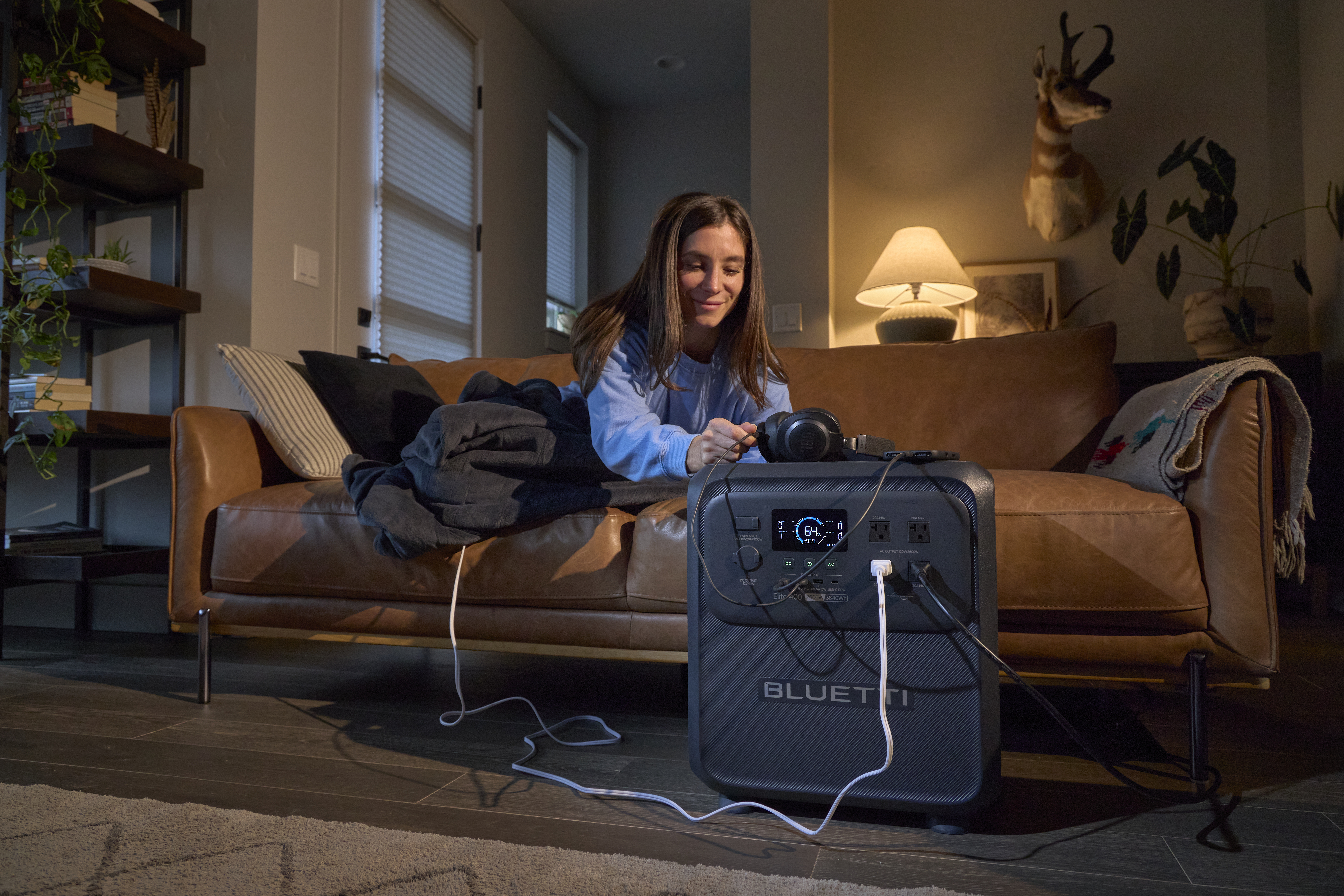
For hours of backup and power for more than the router, portable power stations give you a larger energy store. Charge the station, connect the required network devices through their original AC adaptors, and enable AC output. If the outage has already started, allow any equipment that lost power to boot and reconnect.
The BLUETTI Elite 30 V2 makes a compact backup for the equipment that keeps you connected. Its 288 Wh battery and 600 W AC output fit a small network setup, while the 4.3 kg design is easy to position near the router or move between rooms. With a switchover time of 10 ms or less, it can sit in the power path ready to take over when mains power drops.


BLUETTI Elite 30 V2 | 288Wh 600W Portable Power Station
30dB Quiet Operation at 200W
10ms UPS Response Time
8 Ways to Recharge
3,000+ Life Cycles to 80% Capacity
Ideal for Daily Use and Outdoor Adventures

For a home office that also needs laptop charging, the BLUETTI Elite 100 V2 brings 1,024 Wh of capacity, 1,800 W AC output, and USB-C charging. You can keep the network on AC while charging a laptop directly, with more energy available for a working day and other essentials. Its 10 ms UPS switchover supports a setup that is already connected when mains power fails.


BLUETTI Elite 100 V2 Portable Power Station | 1,800W 1,024Wh
1,000W Max Solar Input
10ms UPS Response Time
4,000+ Life Cycles to 80% Capacity
Lightweight and Portable (Only 25 lbs)
Ideal for Camping and Home Backup
For automatic backup with either model, leave its AC input connected to mains, keep AC output enabled, and select Standard UPS mode in the BLUETTI app. Disable AC ECO auto-off for this low-load setup so it does not turn the network off after a quiet period. Test the changeover by switching off the station’s wall supply and checking that the equipment stays on and a webpage still loads, then restore mains power.
Keeping your home network equipment powered helps maintain internet access when the upstream NBN and provider networks remain available. A portable power station cannot restore a connection if the external network itself is down.
Built-In Battery Backup Where Supported
Some FTTP installations have a Power Supply with Battery Backup. Leave it connected and charged; it powers the NBN box automatically during an outage. The existing battery system provides up to approximately five hours, including an emergency reserve. To activate that reserve after the unit shuts down, hold Battery Emergency Use for two seconds until it beeps and the lights flash. A Replace Battery light or replacement alarm means the battery needs attention. The router still needs its own backup supply.
If an installed home battery backup system supplies your network equipment, use the power points assigned to its backup circuits. Have the installer identify those outlets and confirm the NBN box and router are both on them. This uses the home’s existing backup arrangement instead of adding a separate battery beside the router.
How Long Can Backup Power Keep Your Wi-Fi Running?
Runtime depends on the energy in the battery and the total draw while your network is running. Build the estimate in three steps, then apply it to the hours you need.
1. Find the device watts. Use the manufacturer’s operating-power figure where available. On an adaptor, the DC Output rating can give a starting estimate: 12 V × 1 A = 12 W. That is its maximum output, so it may be higher than the device’s normal use. Do not confuse it with the adaptor’s AC Input rating.
2. Add the equipment you will run together. Count the connection box, modem, router, and any essential mesh node or switch. For the worked example below, assume the complete network draws a steady 30 W through the AC outlets.
3. Include the battery’s usable capacity, conversion efficiency, and its own operating draw. Use the figures for the selected model; the inverter’s own consumption makes a noticeable difference when the connected load is small.
Estimated runtime (hours) ≈ battery capacity (Wh) × usable fraction × conversion efficiency ÷ (device load (W) + station self-consumption (W)).
For example, suppose a fully charged Elite 100 V2 is powering a 30 W network setup. Its manual’s runtime calculation uses 90% depth of discharge, inverter efficiency above 90%, and about 10 W self-consumption. Using 90% efficiency for this estimate gives:
1,024 Wh × 0.90 × 0.90 ÷ (30 W + 10 W) ≈ 20.7 hours
That is about 21 hours for the network alone in this example. It covers an eight-hour workday with energy left over, but laptop charging or other appliances must be added to the load to estimate the whole setup.
What Can You Do if the Network Is Down?
Your equipment is powered, but websites still will not load. Check three things before changing your setup. First, confirm that the router and any required NBN connection equipment are switched on and receiving power. Next, check the modem or NBN box for connection-status lights that indicate whether the service is connected. Finally, use your phone's mobile data to check your internet provider's outage updates. These checks help you distinguish a local equipment or power problem from an unavailable broadband service.
Check NBN and Provider Outage Updates
Use mobile data on your phone to open the NBN network-status checker and enter your full street address. Then check your internet provider’s status page or app for a provider-specific fault and any restoration estimate. If neither lists an outage, report the problem to your provider with the equipment’s indicator-light status; a fault affecting one service may not appear as an area-wide outage.
Use Your Phone as a Mobile Hotspot
First, turn off the phone’s Wi-Fi and confirm a website loads over mobile data. Then enable its hotspot. On an iPhone, open Settings > Personal Hotspot and turn on Allow Others to Join. On Android, look for Mobile Hotspot or Hotspot & tethering in Settings. On the laptop, select the phone’s network name and enter the hotspot password. Keep the phone charging during longer sessions and pause cloud backups or large downloads so your data goes to the work you need to finish.
Switch to a 4G or 5G Backup Connection
For a connection that takes over without changing networks on each device, use a modem-router with built-in mobile failover. On an eligible Telstra Smart Modem plan, for example, mobile backup activates automatically when fixed broadband drops out; a blue front light shows the modem is using the mobile connection. The modem itself still needs power.
If your provider’s modem has no mobile backup, a dedicated 4G or 5G router with an active data SIM can give several devices a separate connection. Place it where the mobile signal is strongest and connect your devices to its Wi-Fi. For regular work from home, try it with your usual calls and applications before choosing a data plan around that use.
Conclusion
Start with the path your internet takes through the house, and put every required power plug on backup. Then size the battery for the hours you actually need, including the station’s own consumption. Set up and test the changeover while mains power is available, so the next blackout calls for less scrambling and fewer interrupted connections.
Frequently Asked Questions
It depends on the NBN technology and which equipment still has power. FTTP may continue if the connection box and your router are backed up and the wider network is available. FTTN, FTTC, FTTB, HFC and Fixed Wireless can also fail if network-side equipment loses power.

Shop Products for This Article


You May Also Like