
Demand Tariff Explained: How Demand Charges Work in Australia

A demand tariff adds a charge based on your highest electricity demand during specified periods, not just the total kWh you use. The exact measurement interval, peak window, and rate depend on the network and retailer. Lower bills usually come from avoiding several high-power appliances running at the same time during the demand window.
A household can have moderate monthly electricity consumption and still face a high demand charge when several high-power appliances run at the same time during the nominated peak window. What matters is not just how much electricity the household uses, but how much power it draws during the interval that sets the peak.
This guide explains how demand tariffs work, how to identify demand charges on your electricity bill, and how to reduce avoidable peaks through smarter appliance scheduling and battery storage without compromising essential household needs.

What Is a Demand Tariff?
A demand tariff combines standard electricity charges with a component based on the highest rate at which a household draws power during a defined period. Energy consumption is measured in kilowatt-hours (kWh), while electricity demand is measured in kilowatts (kW). The demand component reflects the network capacity needed to accommodate periods of high electricity use across the grid. Depending on the retail plan, this charge may pass through network demand pricing directly or form part of a different pricing structure.
Reducing total monthly energy consumption does not necessarily lower the demand component. For example, a household might save several kWh by using the dishwasher less frequently but still record the same monthly peak if the air conditioner and EV charger operate simultaneously during a high-demand interval. Spreading these loads across different times can reduce measured demand without substantially changing total energy consumption.
How Is Peak Demand Measured and Charged?
Demand charges are calculated from the power you draw during eligible meter intervals. Your tariff determines which reading counts and how that demand is priced.
kW Demand Versus kWh Energy Use
Kilowatt-hours (kWh) measure electricity consumed, while kilowatts (kW) measure the rate of consumption. As Energy Made Easy explains, electricity demand charges in Australia reflect how intensively a household uses power. Demand is calculated over a specified meter interval, which may be 30 minutes or another interval defined by the applicable tariff. The measurement interval, eligible peak window and billing formula vary by network and retailer, so check your own plan before applying an example calculation.
Average Demand (kW) = Energy Used (kWh) ÷ Interval Length (hours)
For example, using 3 kWh in 30 minutes produces an average demand of 6 kW (3 ÷ 0.5).
The Highest Demand Interval or Window
On tariffs based on maximum demand, the highest qualifying interval within the specified demand window determines the chargeable peak. Consider these example readings during a 30-minute measurement window:
Time |
Energy Used |
Average Demand |
3:30–4:00 pm |
1.0 kWh |
2 kW |
4:30–5:00 pm |
3.0 kWh |
6 kW |
6:30–7:00 pm |
2.0 kWh |
4 kW |
If all three intervals fall within the applicable demand window and 6 kW is the highest reading for the billing month, 6 kW becomes the monthly peak demand under this calculation method.
Monthly, Seasonal and Peak-Period Variations
Your tariff determines when demand is measured, how often the peak resets and what rate applies. For example, according to Ausgrid's demand pricing guidance, its residential network demand window runs from 3 pm to 9 pm daily during June–August and November–March. Retailers may use different charging arrangements.
To illustrate the calculation, assume a hypothetical tariff that charges $0.15 per kW per day, with a measured monthly peak of 6 kW over a 30-day billing period. This is an example rate, not a quoted or representative Australian retail tariff.
Demand Charge = 6 kW × $0.15 × 30 days = $27
This $27 demand charge would be additional to standard energy usage and supply charges. Actual rates, measurement methods, and seasonal rules depend on your electricity plan.
How Can You Tell Whether You Are on a Demand Tariff?
Check your electricity plan and bill for a demand charge. If the wording is unclear, your retailer can confirm how you're billed.
Check the Tariff Name and Energy Plan Information
Open your retailer's energy plan or pricing schedule. Look for terms such as "demand", "maximum demand" or "capacity charge", along with a rate expressed in units such as c/kW/day. A plan listing peak and off-peak electricity rates in c/kWh does not necessarily include a demand charge.
Find the Demand Charge on the Bill
Check your latest electricity bill for a line labelled "demand charge" or "peak demand". It may show your measured maximum demand in kW, the applicable rate, and the billing period. If no separate demand charge appears, check your plan details before drawing a conclusion.
Confirm the Meter and Network Tariff
If you're still unsure, contact your electricity retailer and ask whether your current plan includes a demand charge. Request the tariff code, demand measurement interval, peak window, and rate. Having a smart meter or being connected to a network with demand tariffs does not automatically mean your retail plan charges you separately for demand.
When Can a Demand Tariff Raise or Lower Your Bill?
A demand tariff can increase or reduce your electricity bill depending on when your household uses high-power appliances and how its peak demand compares with alternative plans.
When can it raise your bill?
If several high-power appliances run simultaneously during the demand window, your measured peak can increase the demand charge. For example, running an air conditioner, oven, and EV charger together may result in a higher bill, even when your total electricity consumption remains relatively modest.
When can it lower your bill?
Households with relatively low peak demand may benefit, particularly when their demand tariff offers lower usage rates than alternative plans. Keeping the measured peak low can reduce the demand component, but it does not automatically make the overall plan cheaper.
Compare your estimated annual costs under each plan using historical smart-meter data. Include electricity usage rates, supply charges, and demand charges. A plan with lower per-kWh rates may still cost more if its demand charges outweigh those savings.
How to Reduce Demand Charges
To lower demand charges, reduce your highest grid-power demand during the tariff's measurement window. Start with appliance timing, then consider solar or battery storage.
Avoid Stacking High-Power Loads
Use your smart-meter data to identify when your household records its highest demand and which appliances are running together.
For example, if your oven and clothes dryer operate simultaneously during the demand window, finish cooking before starting the dryer. This reduces the combined power drawn from the grid without necessarily reducing total electricity consumption.
Focus on appliances contributing to the measured peak, while keeping essential heating or cooling available when needed.
Schedule Flexible Appliances
Set timers for appliances such as dishwashers, pool pumps, water heaters, and EV chargers to operate outside your tariff's demand window where practical.
If several appliances must run during that period, stagger their operating times to avoid creating another high-demand interval. Check any time-of-use electricity rates as well, since moving consumption to another period may change your energy charges.
Use Solar or Battery Peak Shaving Where It Fits
Solar panels can reduce grid demand when electricity production overlaps your tariff's demand window. If your highest demand occurs after sunset, battery storage may be more useful.
An appropriately configured battery can discharge during high-demand intervals, reducing the power imported from the grid. To be effective, it needs sufficient output power (kW) to offset the peak and enough stored energy (kWh) to sustain the discharge.
Check your smart-meter data after making changes to confirm whether your highest measured grid demand has decreased.

Lower Measured Peak Demand With BLUETTI Storage
If appliance scheduling alone cannot reduce your demand peaks, BLUETTI offers installed storage for household loads and portable power for selected appliances.
For single-phase households, the BLUETTI EP760 combines a hybrid inverter with B500 battery modules, each providing 4.96 kWh of capacity. Compatible configurations can expand to 39.68 kWh and deliver up to 7.6 kW of output. This makes it suitable for households seeking to store solar energy and schedule battery discharge during high-demand periods, reducing grid imports when several appliances are operating.
For larger three-phase homes with substantial electricity demand, the BLUETTI EP2000 provides a higher-capacity option. Starting at approximately 14.7 kWh with two B700 battery modules, it supports expandable storage and energy management modes, including time-of-use operation. Households with high evening demand or multiple power-intensive appliances can use an appropriately configured system to reduce reliance on grid electricity during expensive demand intervals.
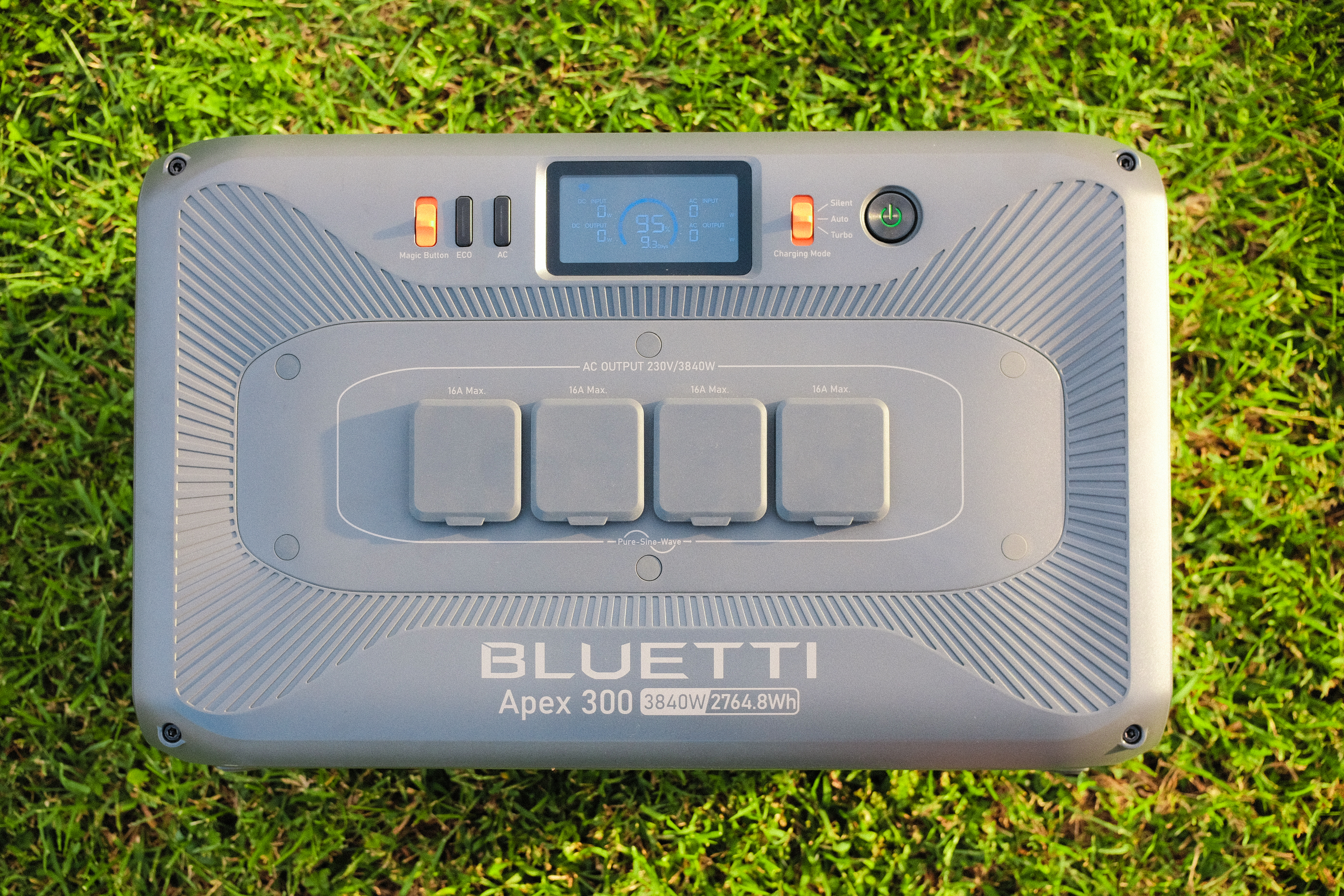
For households that prefer a portable option, the BLUETTI Apex 300 offers 2,764.8 Wh of capacity and 3,840 W of AC output. It can power selected compatible plug-in appliances independently of the grid. This may reduce grid consumption by those appliances while they run from the power station, but it does not automatically manage whole-home demand or provide coordinated grid-connected peak shaving. Its suitability depends on the loads being powered, their running and startup requirements, and the available battery energy.


BLUETTI Apex 300 Versatile Power Station | 3,840W 2,764.8Wh
2,400W Max Solar Input
20ms UPS Response Time
6,000+ Life Cycles to 80% Capacity
Expandable Storage
Ideal for Smart Home Energy Management
Choosing a home battery backup solution depends on your household's peak demand, phase configuration, and the appliances you want to support. Fixed storage is better suited to coordinated household peak shaving, while portable systems offer flexibility for individual loads.
Conclusion
A demand tariff charges for concentrated power use as well as total energy. To manage it, confirm the retailer’s interval, peak window, and pricing formula, then use smart-meter data to find the loads that create the highest kW demand. Staggering high-power appliances is usually the first and cheapest response. Solar and battery storage can provide additional peak-shaving support when system output, available energy, and operating schedules align with the tariff. For households exploring this approach, explore BLUETTI’s home energy solutions to find an option that suits your household’s energy needs.
Frequently Asked Questions
It is a charge linked to your highest measured electricity demand during specified periods, usually expressed in kW. The retailer may multiply that demand by a daily or monthly rate. It is separate from the kWh charge for total energy use, so a short high-load interval can affect the bill even when monthly consumption is moderate.

Shop Products for This Article

You May Also Like